
Most people meet Montjuïc for twenty minutes: a photo at the fountain, a cable-car selfie, back to Las Ramblas by dark. That is a waste of the best half-day in Barcelona. This is a whole green mountain rising straight off the port — fortress at the top, museums stacked down its flanks, cactus gardens and a hidden woodland bar tucked into the pines — and if you walk it in the right order you get the city's finest views, its deepest history and its cheapest afternoon, all without pre-booking a single queue.
Think of Montjuïc as a stack of terraces. The grand museum front faces the city at the bottom; the castle and its sea panorama sit at the very top; and between them run gardens, an Olympic plateau and a scatter of art you would cross town for. Here is how to read the hill, from the ceremonial foot to the wild upper woods, with honest notes on what suits a couple, what suits a group of ten, and where the free option genuinely beats the ticketed one.
Start at the foot: the grand approach
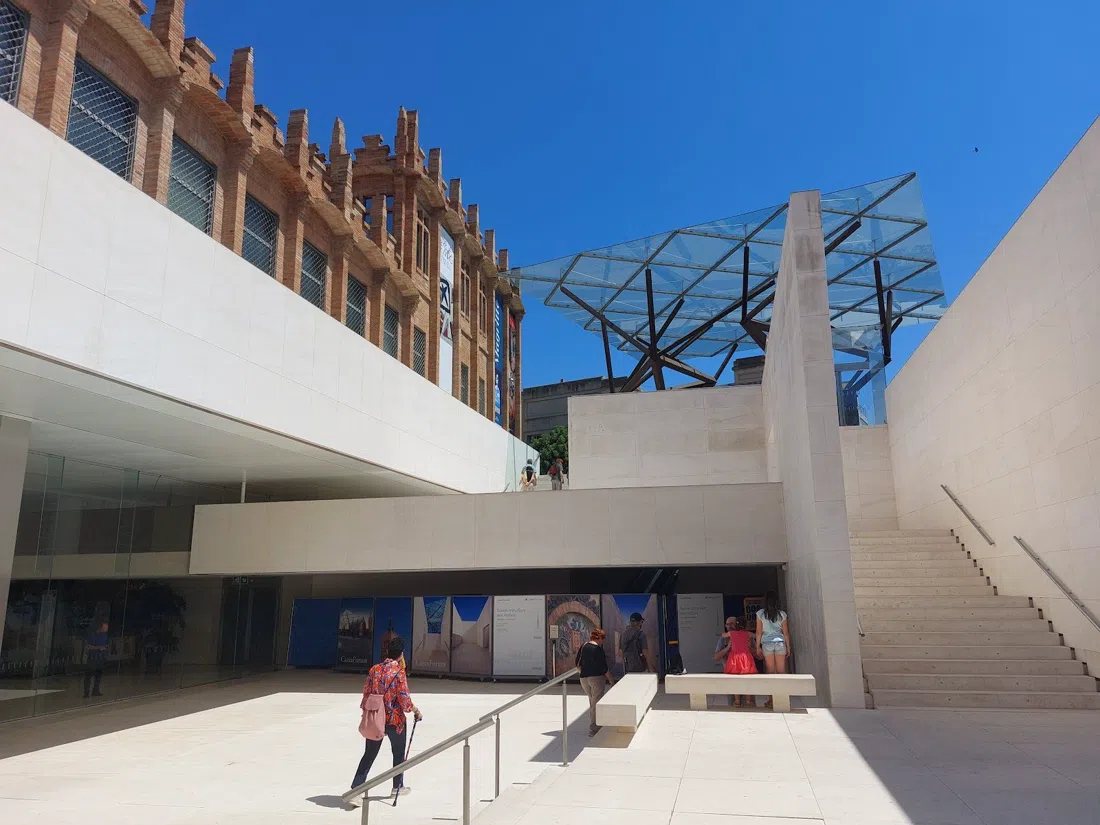
Come up out of Plaça d'Espanya and the hill announces itself theatrically, a broad avenue of columns and cascades climbing to a domed palace. Before you climb, duck sideways. CaixaForum Barcelona (Plaça d'Espanya foot of the hill) sits in a red-brick former textile factory, a Modernista industrial gem that is worth the look even before you check what is showing. Entry is low — around €6, and often free — the doors are open daily 10am–8pm, and it handles groups without fuss. It is the smartest rainy-day move on the mountain and, crucially, it is a two-minute walk from the next stop.
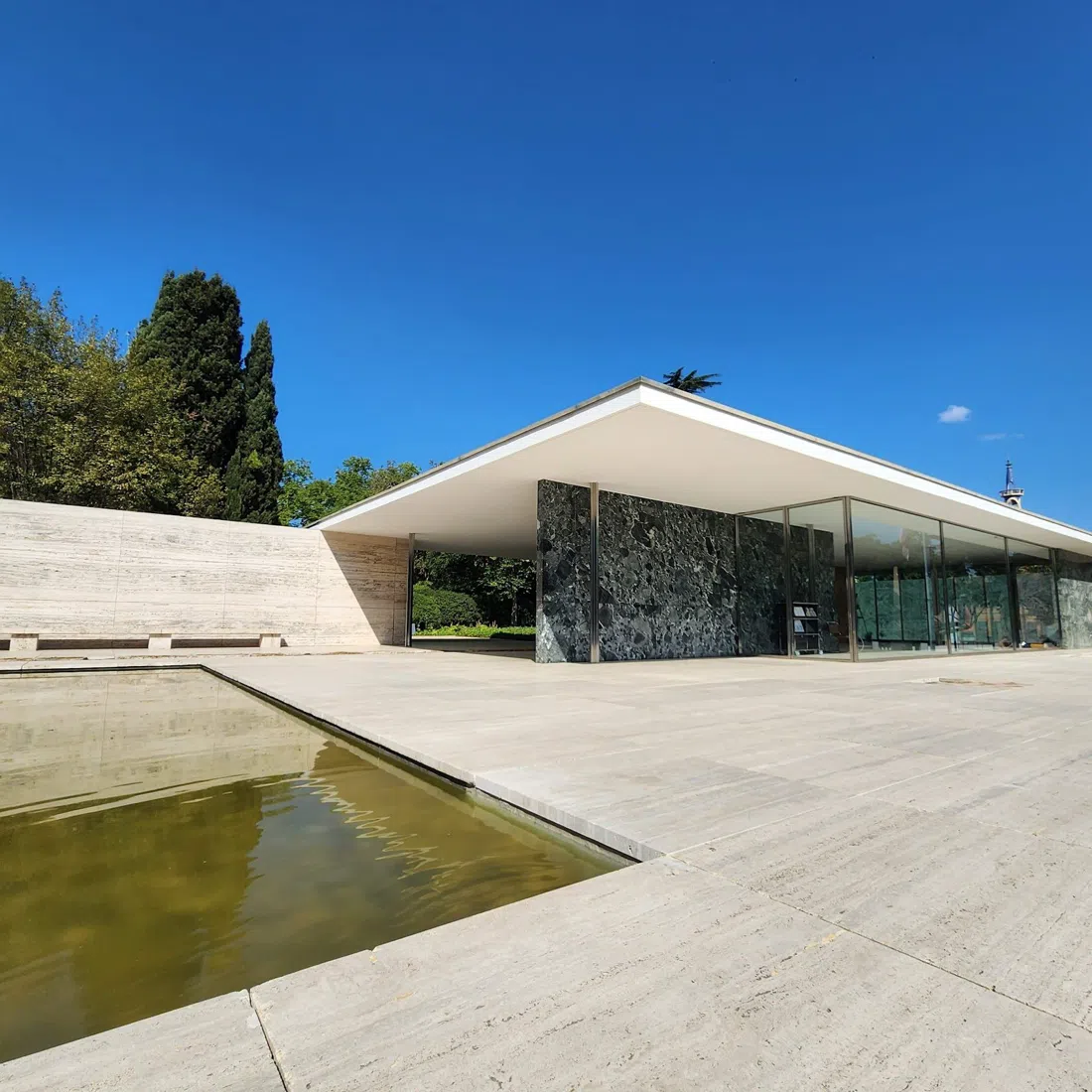
That next stop is the one design lovers cross continents for. The Pavelló Mies van der Rohe (beside CaixaForum) is a faithful rebuild of the German Pavilion Mies van der Rohe designed for the 1929 International Exhibition — travertine, onyx, a still black pool and the famous Barcelona chair, all for about €8. Be honest with yourself about who you are bringing. It is a compact, contemplative twenty minutes: sublime for anyone who cares about modern architecture, a bit of a shrug for a restless group of ten who would rather be moving. Couples and design pilgrims, linger. Big lively parties, admire it from outside and press on.
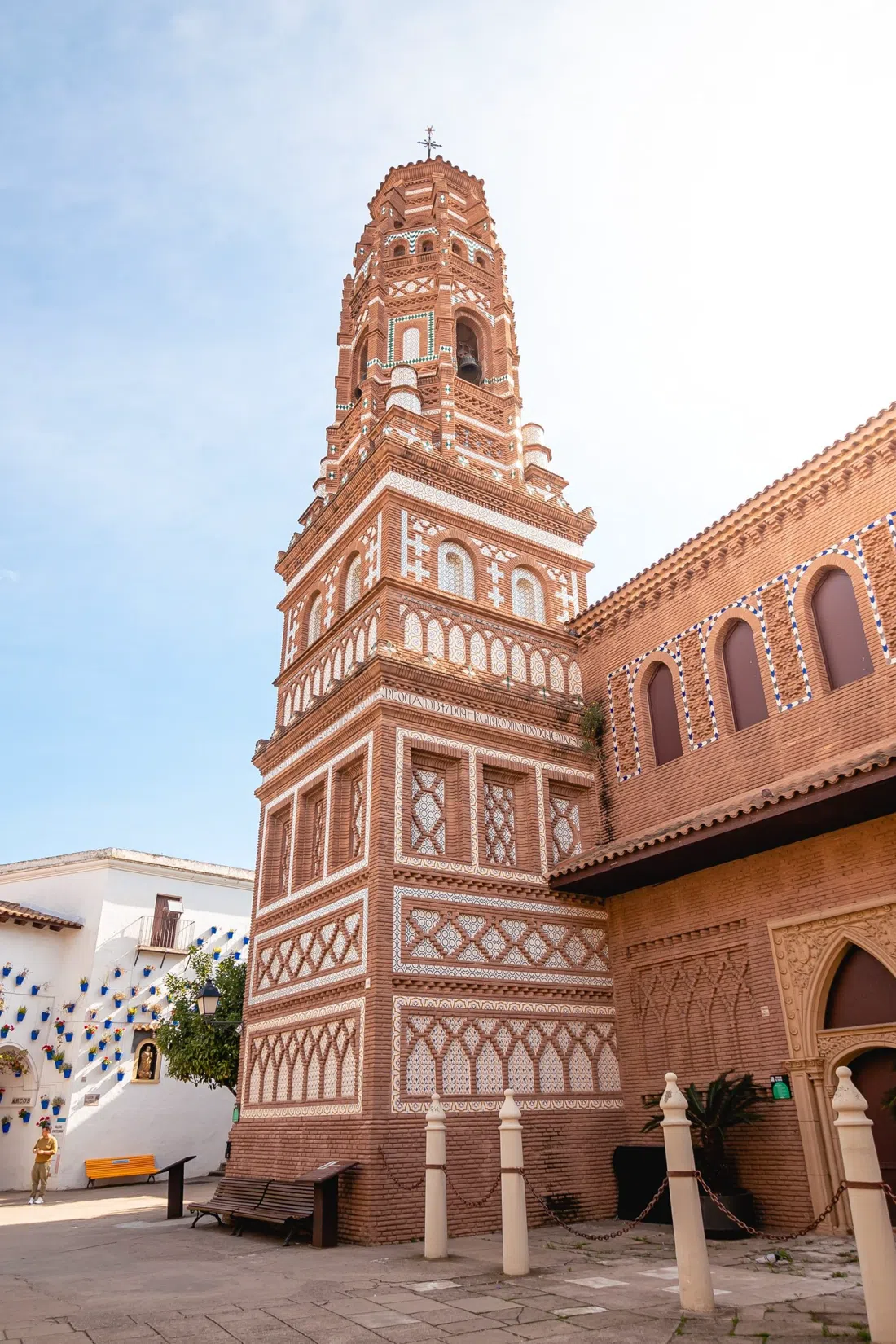
A short walk uphill brings you to Poble Espanyol (lower Montjuïc), and here the calculus flips entirely. This open-air museum crams a walkable tour of Spanish architectural styles into one site, threaded with artisan workshops and squares, and it is built for a crowd — private tours, flamenco-with-dinner (from around €85), and summer Saturday live rumba all cater to parties. Standard entry is €13.50 and it opens 365 days a year. Yes, it is touristy. It is also genuinely good fun for a mixed group who want to eat, watch a show and wander, and it solves the eternal problem of pleasing ten people with ten different moods.
The great museum front and its free rooftop
Now climb the ceremonial stair, or ride the escalators beside it, to the palace that crowns this lower tier. The Museu Nacional d'Art de Catalunya (Palau Nacional, mid-hill) — everyone calls it MNAC — holds a Romanesque fresco collection with no rival in the world: whole church apses lifted from the Pyrenees and rebuilt indoors. But here is the tip that matters even if you never look at a painting. Your ticket, around €12, includes the rooftop terrace, and that terrace is the finest free-standing skyline view in the city, angled straight down the avenue you just climbed. Come for late afternoon, stay for the colour change, and if you want the art for nothing, the first Sunday of each month is free. It absorbs groups easily.
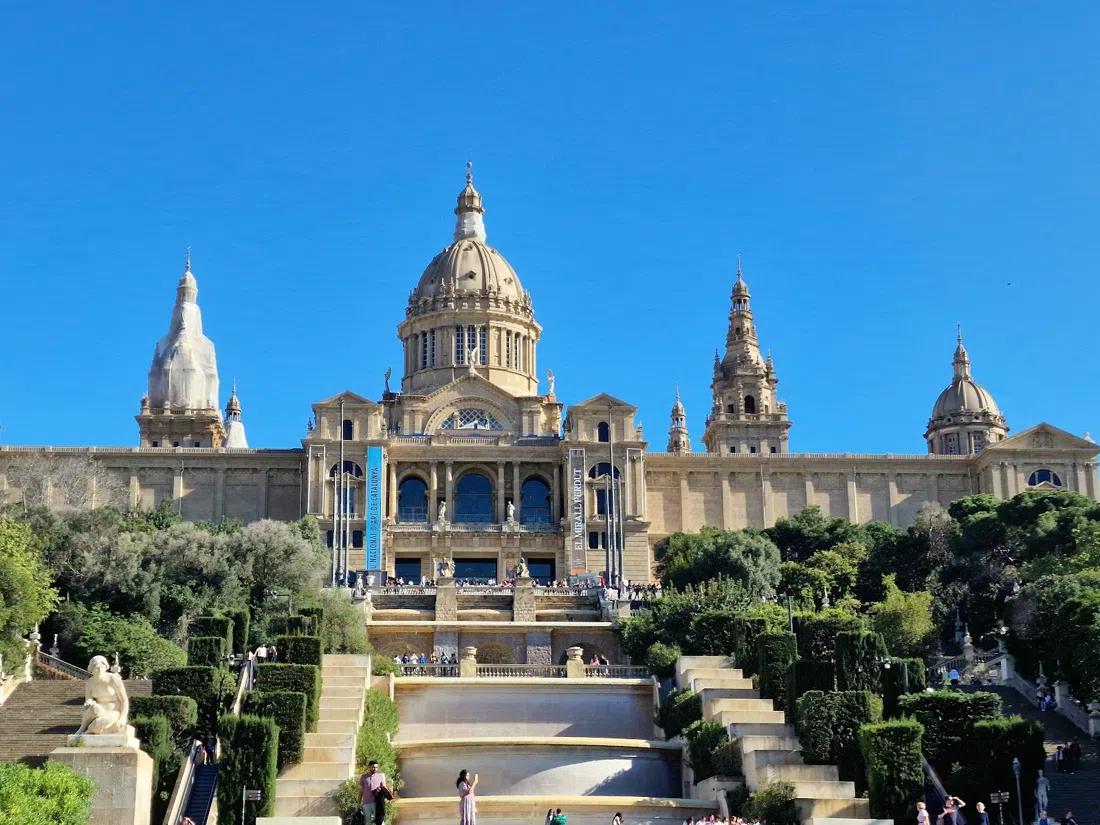
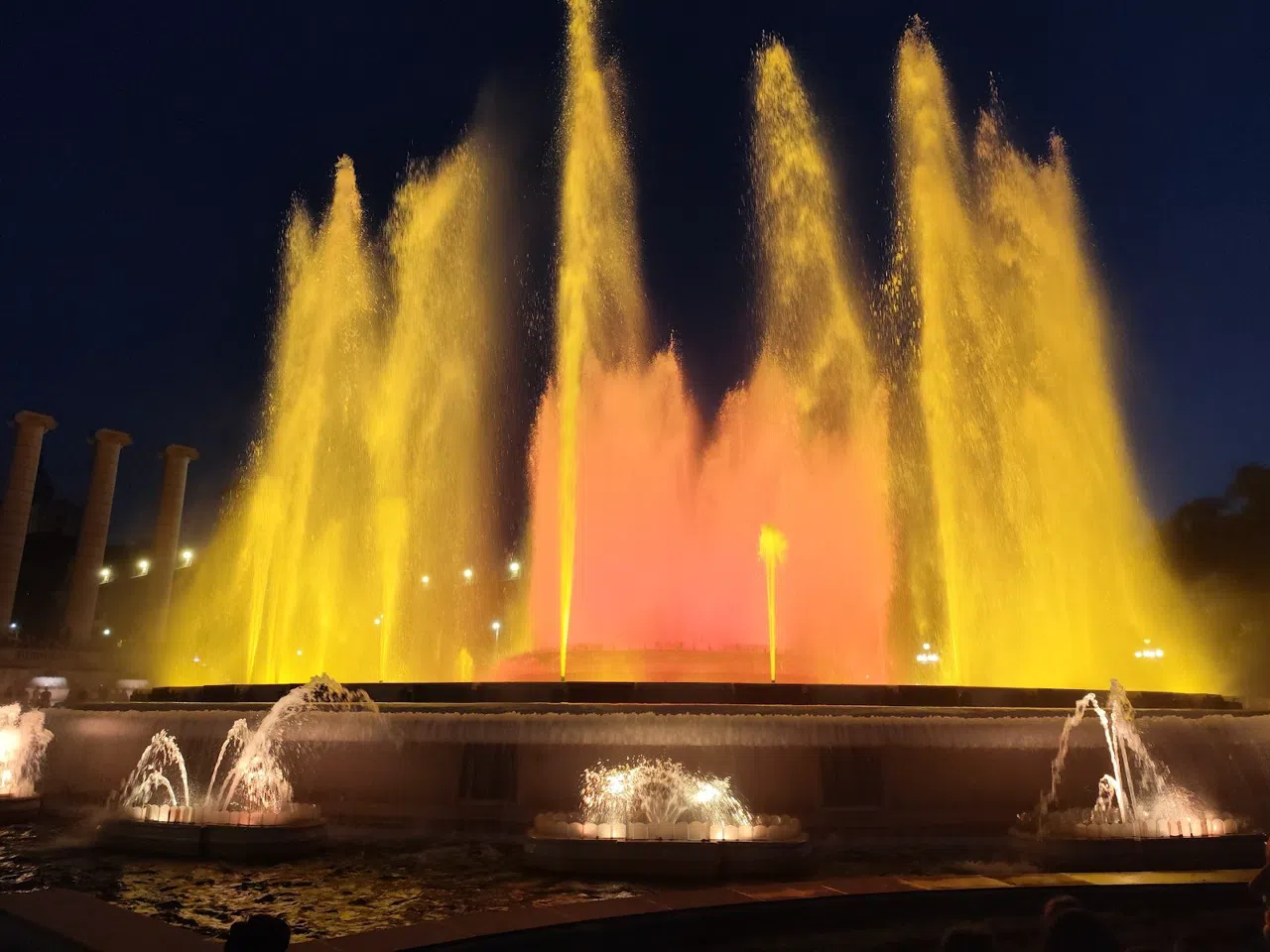
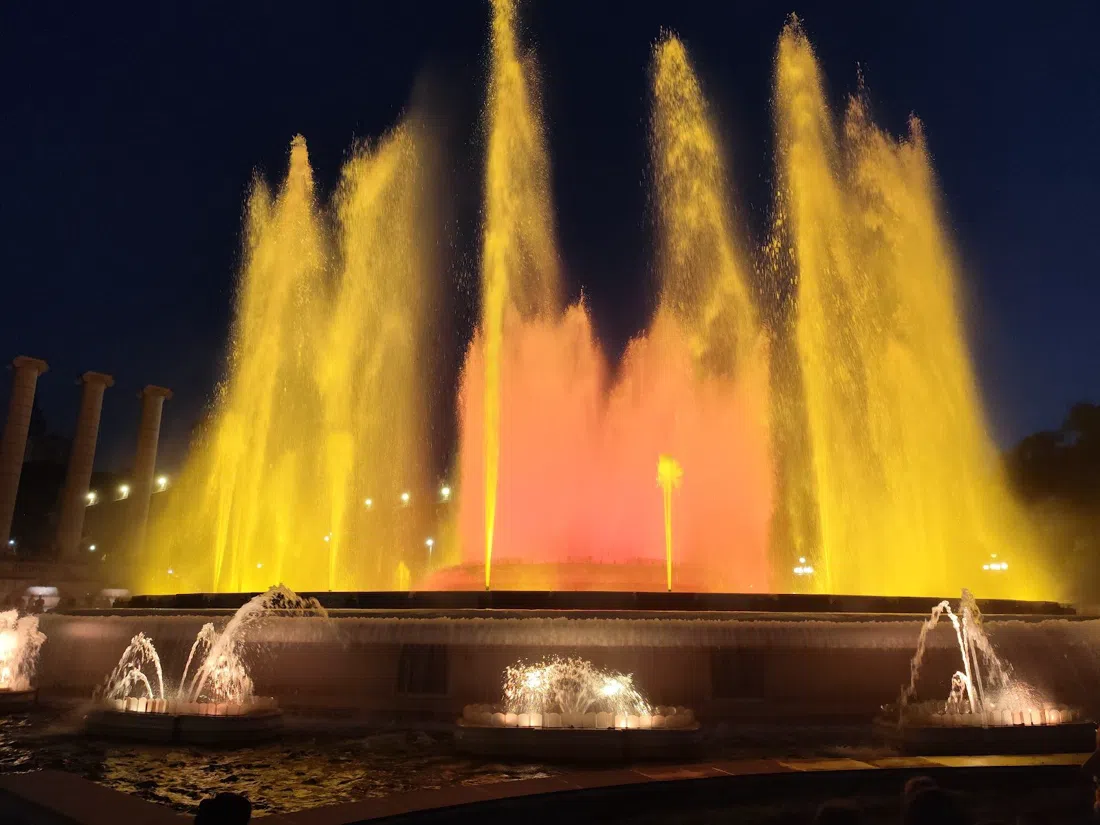
From the palace terrace you are perfectly placed for the hill's signature after-dark event, directly below you. The Font Màgica de Montjuïc (foot of the Palau Nacional) — the Magic Fountain — throws water, light and music up the slope on show nights, and it is the one Montjuïc experience that is completely free, open-air and unticketed. That makes it ideal for absolutely any group size: no booking, no door, you simply turn up. Two warnings born of experience. First, arrive early and claim a step, because the crowd is large and the good sightlines go fast. Second, and this catches people out constantly, the shows run on a seasonal schedule — broadly Thursday to Sunday evenings — and they went dark for a stretch during the drought before resuming, so an August Thursday or a mid-winter night can be silent. Check the current 2026 timetable before you build your evening around it.
Riding up to the crown
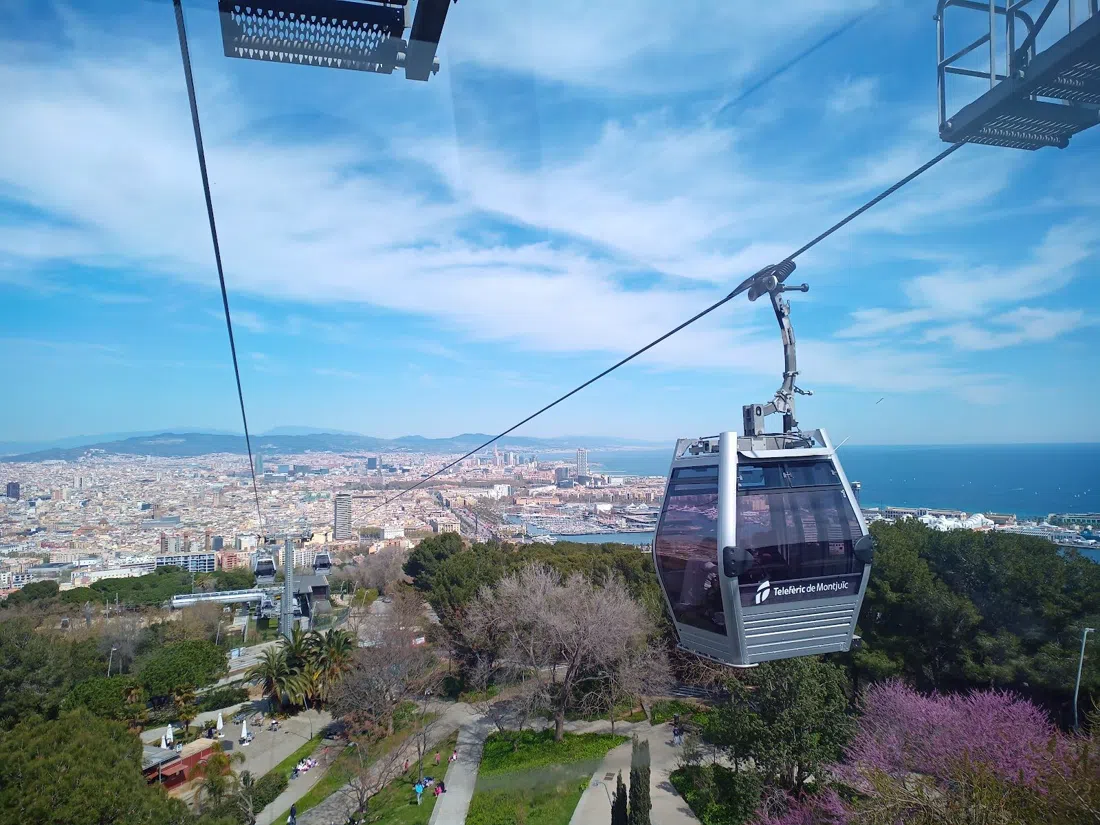
The upper half of the mountain is where the views turn from good to extraordinary, and you have a choice about how to reach it. The Telefèric de Montjuïc (mid-hill to summit) is the scenic option: a cable car in eight-person cabins running three stops, from Parc de Montjuïc up through a Mirador halt to the castle itself. A return runs roughly €15–17; buy a timed ticket online and you skip the queue that builds on warm afternoons. For a big party it works fine — you simply split across several cabins and regroup at the top. My honest steer: it earns its price paired with the castle at the summit rather than taken as a standalone up-and-down, so treat the two as one outing.
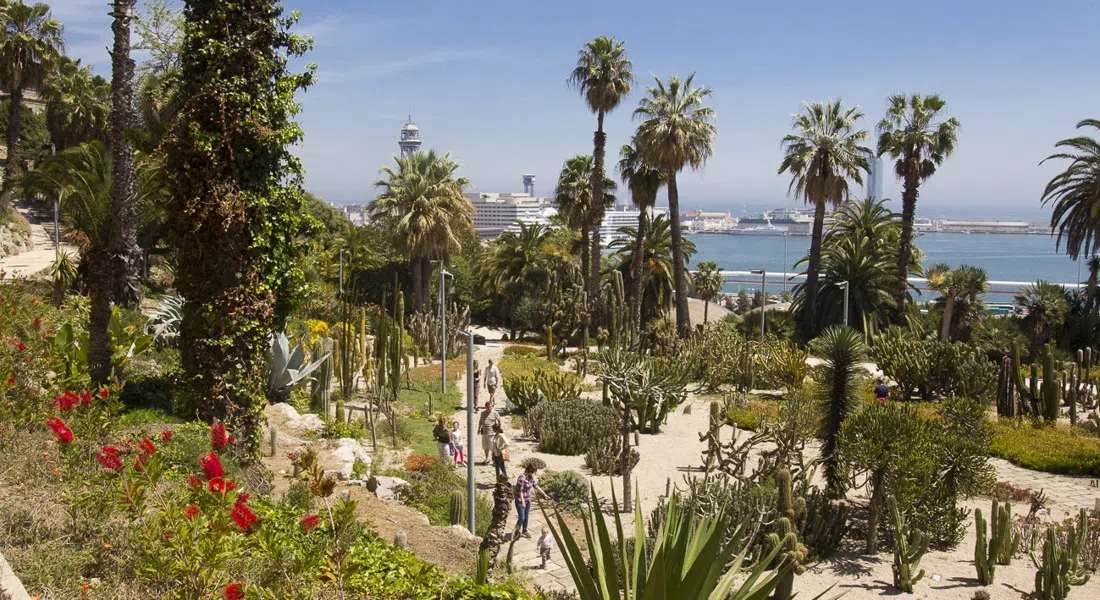
Before or after you ride, spend the free half-hour that most visitors miss. The Jardins de Mossèn Costa i Llobera (seaward slope, near the cable-car base) hold one of Europe's largest cactus collections in a genuine sun-trap microclimate, with the cruise port glittering below. It is open-access, costs nothing, and makes a quiet, photogenic pause between the sea and the summit — a relaxed stroll for any group, and a welcome bit of calm between the busier attractions.
The summit: fortress, sea and a darker story
Step out at the top and the whole reason for the hill snaps into focus. The Castell de Montjuïc (summit) is a squat, star-shaped fortress with wide open ramparts, and from them you get the best sea-and-port panorama anywhere on the mountain — container ships, the Mediterranean, the city fanned out behind. Entry is cheap, around €9, and free on Sundays after 3pm; the ramparts and courtyards are ideal for a group to roam. But do not treat it as a pretty viewpoint and nothing more. This castle spent centuries pointed at the city rather than the sea, a place of imprisonment and execution, and reading even a little of that history as you walk the walls makes the panorama land very differently. It is the one summit stop I would never skip.
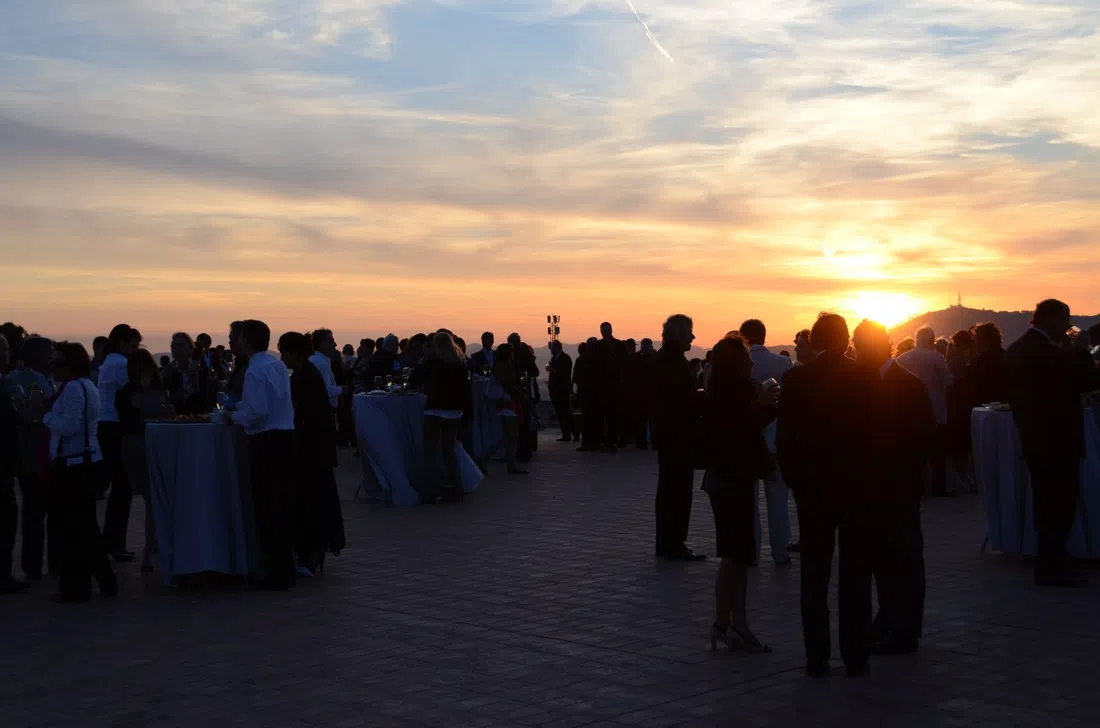
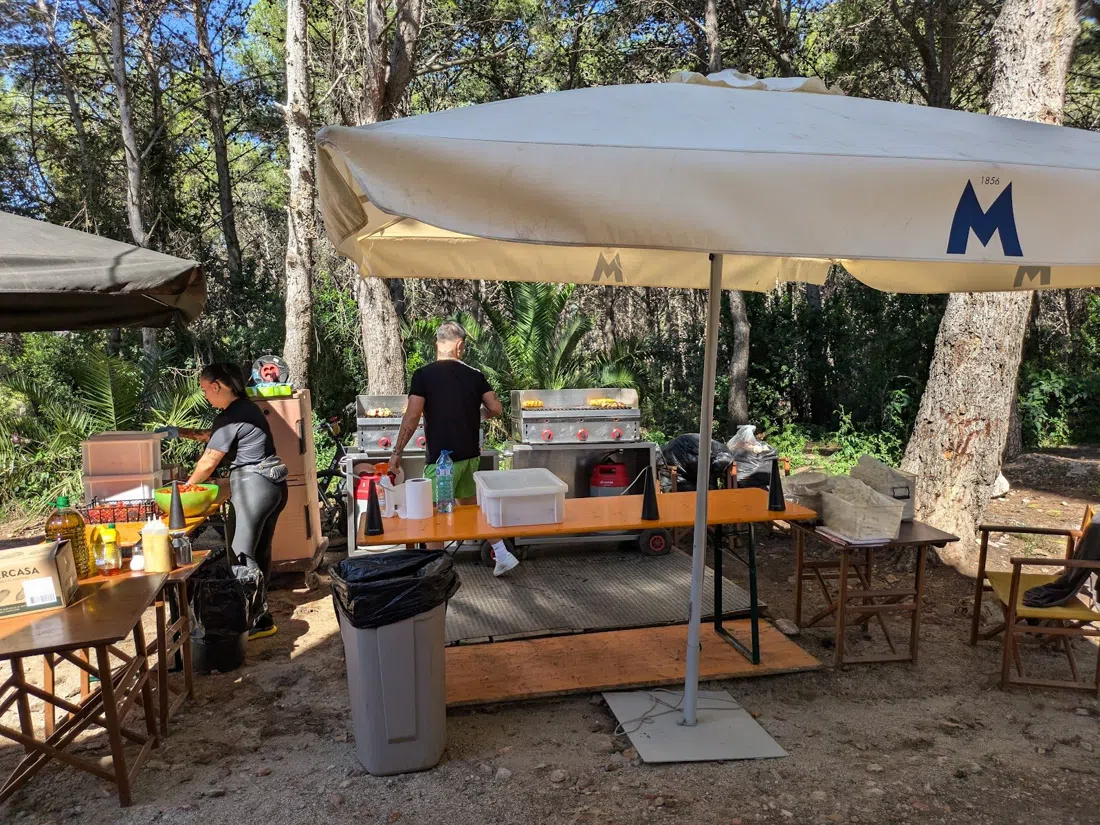
Walk off the back of the summit and the mountain gets wilder and lets you in on its best-kept secret. La Caseta del Migdia (upper pine woods, behind the castle) is a cult outdoor bar hidden among the trees, all long views, cheap drinks, casual food, rumba and lazy DJ sessions. The catch is real: it opens weekends only, roughly Saturday and Sunday daytime, and you reach it on foot through the woods. That makes it perfect for an easygoing crowd chasing a sundowner and hopeless for a fast-moving bar crawl. Check its current Instagram hours before you commit the walk — the forest location and limited opening strand the unprepared, and there is nothing else up there if it is shut.
The Olympic plateau
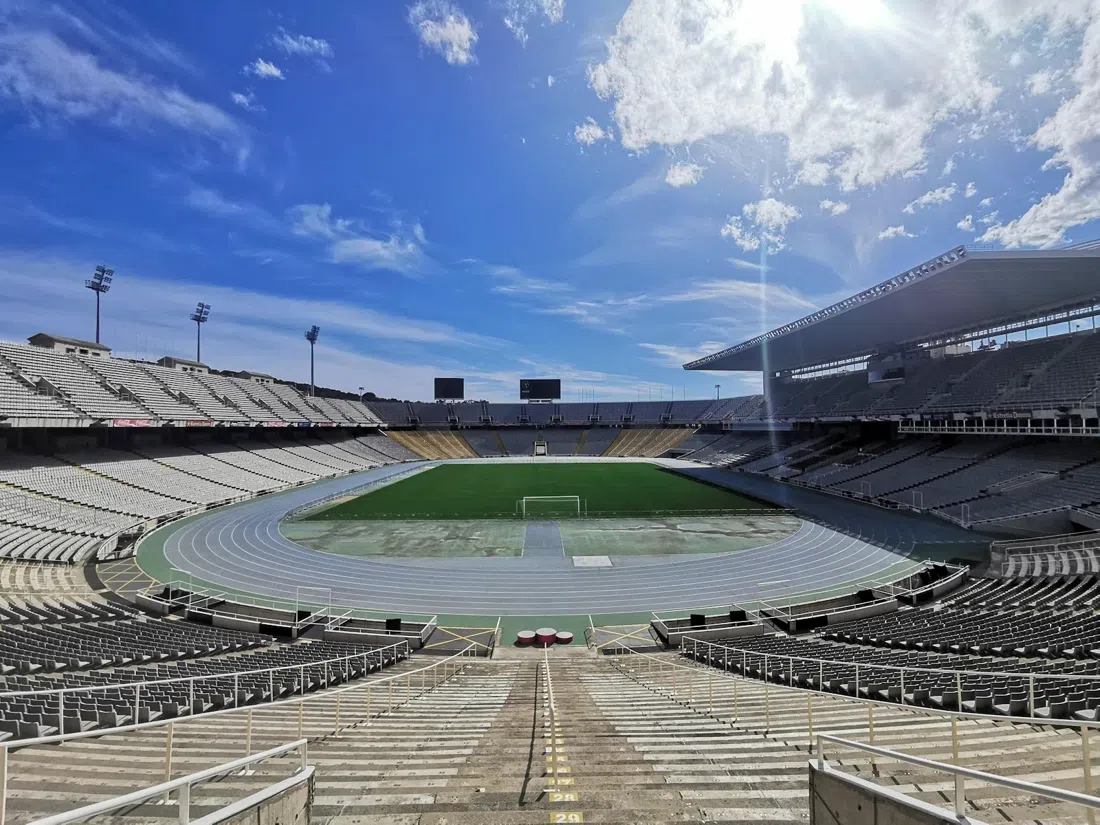
Between the museums and the summit sits the flat shelf that Barcelona rebuilt for 1992, and it is free to wander. The Estadi Olímpic Lluís Companys (Anella Olímpica, upper terrace) still stands with Calatrava's white communications tower spiking the sky beside it. You can walk the exterior esplanade for nothing — good for any group — and on non-event days a self-guided interior visit usually opens, though it is worth checking at the gate as it recently served as a football club's temporary home ground. Match days aside, it is a free, oddly moving wander through a moment when the whole city reinvented itself.
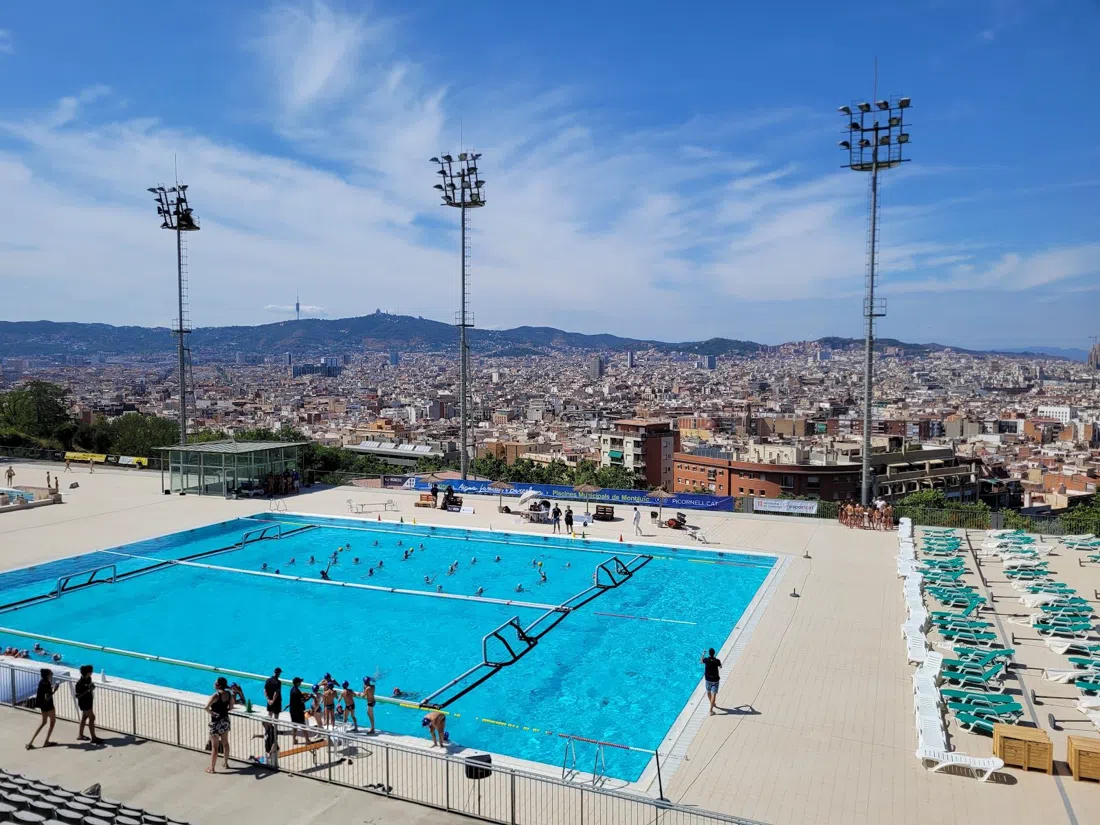
A step away is the hill's most photographed swim, and the one with the tightest window. The Piscina Municipal de Montjuïc (Anella Olímpica, upper terrace) is the open-air "pool with a view" from Kylie's Slow video, the city stacked up behind the water. Manage your expectations before you pack a towel: only the 25-metre pool is open to swimmers, the diving boards are closed to the public, entry is about €6.50, and it opens only in high summer — June to August, roughly 11am to 7pm. It is small and wildly popular, so it caps capacity and you must arrive early. A group can do it in July, but it is a summer-only novelty, not a reliable plan.
One more for the art lovers
On the walk back down towards the museum front, one stop deserves its own moment. The Fundació Joan Miró (mid-hill, near the funicular) is the city's home of Miró, set in a luminous white modernist building that is half the pleasure of the visit. Entry is around €15, it is closed on Mondays, and pre-booked tickets make it painless for a group. There is extra reason to go in 2026: the foundation marks its 50th anniversary and leans into architecture themes across the year, so even if Miró's shapes are not your usual thing, the building and the programme reward the detour. Pair it with the MNAC rooftop and you have bracketed the hill with its two best pieces of art.
Practicalities: how to do the hill without the hassle
Getting up and down. The lazy route is Metro to Plaça d'Espanya, walk up past CaixaForum and the fountain to MNAC, then the funicular from Paral·lel Metro to catch the cable car for the final climb to the castle. Fit walkers can do the whole hill on foot in a loop; it is a real hill, though, so save your legs for the top. Coming down after the Magic Fountain, the Plaça d'Espanya Metro is a five-minute stroll.
Timing. Go anticlockwise with the sun: museums and gardens through the afternoon, the castle ramparts and MNAC rooftop for golden hour, La Caseta del Migdia for a weekend sundowner, and the Magic Fountain to close — but only on a confirmed show night. Check three 2026 schedules before you leave: the fountain's evenings, the pool's June–August season, and La Caseta's weekend hours.
Money. Carry a little cash for the woodland bar and kiosks, though cards work almost everywhere else. Budget-wise this is one of the cheapest big days in the city: the fountain, the Olympic esplanade and the cactus gardens are free, the castle is under a tenner (free Sunday afternoons), MNAC is free the first Sunday of the month, and even the cable car and Poble Espanyol are modest. You could fill a superb afternoon here for the price of a couple of drinks.
Groups versus couples. Poble Espanyol, the castle ramparts, the Olympic esplanade and the fountain steps all swallow a big party happily. The Mies Pavilion, La Caseta's woodland walk and the summer-capped pool suit couples and small, patient groups far better — plan around that and nobody sulks.
Base yourself within easy reach and you can do Montjuïc on a whim rather than a mission; start your Barcelona hotel search around Plaça d'Espanya or Poble-sec for the shortest walk to the foot of the hill, and dip into the wider Barcelona guide to slot the mountain into the rest of your trip.